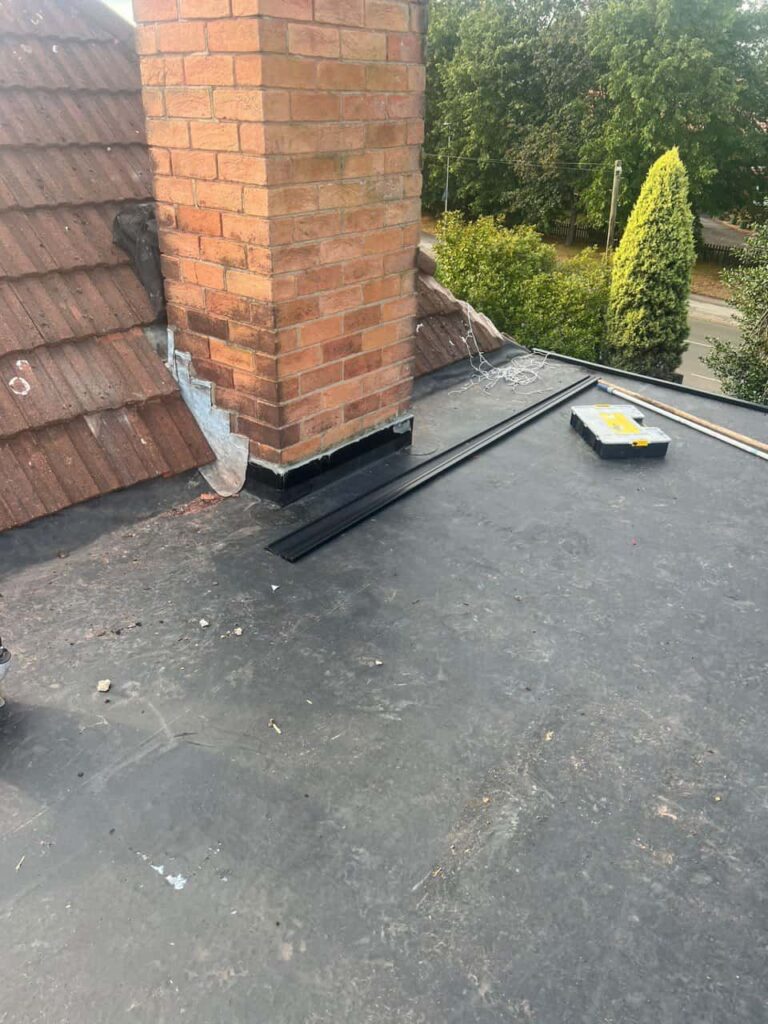
When a roofing problem becomes visible, it is natural to assume that the most obvious damage is also the source of the problem. A cracked tile, damp ceiling, displaced section of roofing or staining around a wall may appear to provide a straightforward explanation. In practice, roofing defects are not always located where their symptoms become most noticeable.
Water can travel beneath roof coverings, movement in one area can affect neighbouring components, and deterioration can develop beneath materials that still look reasonable from the outside. As a result, repairing only the most visible damage can sometimes leave the underlying cause unresolved.
For homeowners in Wingerworth, Nottinghamshire, professional roof assessment is valuable because it focuses on understanding why the defect has occurred rather than simply treating what can be seen most easily.
Why Does Visible Roof Damage Not Always Reveal the True Problem?
A roof functions as a complete system. Tiles or slates form the visible covering, but underlay, battens, flashing, valleys, ridges, verges and junctions all contribute to keeping the property weather-resistant.
A visible defect may therefore be either the original cause or simply a consequence of another problem.
Factors that can make diagnosis less straightforward include:
- Water travelling beneath the roof covering
- Deterioration hidden below tiles or slates
- Defective flashing away from the visible damp area
- Problems around roof valleys or junctions
- Movement affecting neighbouring roofing materials
- Damage to underlying components
- More than one defect contributing to the same symptom
- Previous repairs concealing rather than resolving the original problem
Understanding these possibilities helps explain why a thorough inspection should come before deciding what needs repairing.
A Ceiling Stain Does Not Identify the Entry Point
Internal dampness is one of the clearest signs that a roofing system requires attention, but it does not necessarily show where rainwater first entered.
After passing beneath the external roof covering, water can follow the roof slope, travel along underlay or move across timber before reaching the ceiling below.
The point where moisture finally becomes visible may therefore be some distance from the actual defect.
Repairing the roof directly above a ceiling stain without tracing the likely route of the water can result in the wrong area receiving attention.
Water Can Travel Sideways Through a Roof
Rainwater does not always follow the route homeowners might expect.
Roof construction contains numerous surfaces that can redirect moisture. Underlay can carry water down the roof slope, while timbers and other components can allow moisture to move before it eventually drips or collects.
Wind-driven rain can make the situation more complicated because water may enter from an angle rather than falling directly onto a vulnerable point.
This is why understanding when and how a leak occurs can provide useful information during diagnosis.
A Damaged Tile May Be a Symptom Rather Than the Cause
A cracked or displaced tile is an obvious defect, but it is worth establishing why the material has moved or failed.
An isolated tile can certainly be damaged without there being a wider roofing problem. However, repeated displacement in the same area may indicate deterioration to fixings, battens or neighbouring components.
Simply replacing the visible tile could therefore address the immediate appearance while leaving the reason for repeated movement unchanged.
A professional assessment considers both the damaged material and the condition supporting it.
Hidden Deterioration Can Develop Beneath Tiles and Slates
The external covering provides only part of the picture.
Underlay and battens sit beneath tiles or slates and play important roles within the roofing system. Because they are concealed during normal use, deterioration may not be visible from ground level.
A roof can consequently appear reasonably intact while moisture is affecting materials underneath.
Where leaks have been present for some time, assessing the relevant underlying components helps determine whether the defect remains localised or extends further than the visible surface suggests.
Flashing Problems Can Appear Somewhere Else Internally
Flashing protects vulnerable locations where different roof surfaces or building elements meet.
If flashing becomes loose, damaged or deteriorated, water can pass behind it and travel before becoming visible inside the property.
The resulting damp patch may therefore appear away from the defective flashing itself.
This can lead to confusion if attention is focused only on the internal symptom. Inspecting likely entry points and understanding the path water could take provides a more reliable method of diagnosis.
Valleys Can Produce Significant Symptoms From Small Defects
Roof valleys handle concentrated volumes of rainwater from adjoining slopes.
Because so much water can pass through these areas during rainfall, a relatively small defect can create noticeable water ingress.
The actual weakness may be confined to part of the valley, while internal dampness spreads across a larger area.
This is an important example of why the size of the visible symptom should not automatically be used to judge the extent of the roofing defect.
The Most Weathered Area May Not Be the Area Causing the Leak
Some parts of a roof naturally appear more weathered than others.
Discolouration, surface ageing or other visible changes can attract attention during an inspection from ground level. However, the oldest-looking section is not necessarily the section allowing water into the property.
A less obvious defect around a junction or beneath a displaced component may be more significant.
Roof condition should therefore be assessed according to performance and physical integrity rather than appearance alone.
One Defect Can Cause Damage Somewhere Else
Roofing problems can sometimes create secondary symptoms.
For example, water entering through one vulnerable point may affect materials further down the roof. The resulting deterioration can then become more visually obvious than the original entry point.
If only the secondary damage is repaired, moisture may continue to reach the area from the unresolved defect above.
Understanding the sequence of deterioration is therefore important when planning effective repairs.
Several Small Defects Can Produce One Large Symptom
Not every roofing problem has a single cause.
Water ingress may sometimes result from several smaller defects acting together. Individually, none may appear particularly serious, but collectively they can reduce the roof’s ability to manage rainfall effectively.
This is particularly relevant where several adjoining roofing components have deteriorated.
A broader assessment can determine whether the visible problem originates from one specific weakness or from several connected defects that need to be considered together.
Previous Repairs Can Make Diagnosis More Complicated
A roof that has received previous attention can sometimes be more difficult to assess.
Earlier repairs may have successfully corrected one problem while another nearby defect later develops. Alternatively, previous work may have addressed where water appeared rather than where it originally entered.
This does not necessarily mean the previous repair itself is responsible for the current issue.
Instead, the repair history should be considered alongside the present condition to understand how the problem has developed and which areas now require investigation.
Weather Conditions Can Provide Important Clues
When a leak occurs can be almost as useful as where it appears.
A roof that leaks only during prolonged rainfall may have a different type of defect from one that develops water ingress primarily during strong winds and rain.
Similarly, a problem that appears quickly after rainfall begins can indicate a different route of entry from moisture that becomes visible much later.
These patterns can help narrow the investigation and provide useful context when assessing less obvious roofing defects.
Why Quick Surface Repairs Can Miss the Real Problem
Applying a temporary treatment to an obvious gap may sometimes reduce water ingress, but it does not guarantee that the underlying cause has been resolved.
If moisture is entering through another point or if deterioration extends beneath the surface, the problem can return.
A dependable repair should restore the function of the affected roofing component rather than simply conceal its visible symptom.
This is why diagnosis is such an important part of professional roof repair.
Finding the Cause Can Prevent Unnecessary Roofing Work
Accurate diagnosis is valuable not only because it helps solve the problem but also because it can prevent sound roofing areas from being disturbed unnecessarily.
A serious-looking leak can sometimes originate from one localised defect. Once that defect is identified, targeted repair may be all that is required.
Conversely, a small visible issue can occasionally reveal more extensive deterioration beneath the surface.
Knowing the actual cause allows the scope of work to reflect the condition found rather than the appearance of the symptom.
When Does a Visible Problem Suggest Wider Deterioration?
Although visible damage is not always the original cause, it should still be taken seriously.
Multiple damaged sections, recurring leaks, widespread material movement or deterioration appearing around several roof details can indicate that the problem is broader than one isolated defect.
In these circumstances, inspecting the entire roofing system provides useful context.
The aim is to establish whether the latest visible damage stands alone or forms part of a developing pattern across the roof.
Why Professional Roof Diagnosis Adds Value
Identifying roofing defects requires an understanding of how different roof components work together and how water can travel once it gets beneath the external covering.
At Wingerworth Roofing Repairs, we focus on determining the cause and extent of roofing problems before recommending the appropriate work. This means looking beyond the most obvious damage and considering the relevant surrounding materials and roof details.
For property owners in Wingerworth, Nottinghamshire, this approach can help ensure that repairs are directed towards the actual defect rather than simply the most noticeable symptom.
Conclusion
The most visible roof damage can be different from the actual cause because roofing problems do not always remain confined to the point where they begin. Water can travel beneath coverings, hidden components can deteriorate, and one defect can create symptoms elsewhere in the roofing system.
A ceiling stain may not sit beneath the original leak, and an obvious damaged tile may not explain why the problem developed. The most reliable approach is therefore to identify the underlying cause before deciding what needs repairing.
If your property in Wingerworth, Nottinghamshire is showing signs of roof damage or water ingress, contact Wingerworth Roofing Repairs. We can assess the affected area, investigate the underlying cause and recommend appropriate roofing work based on the condition found.
Call us on: 01246 956 395
Click here to find out more about Wingerworth Roofing Repairs
Click here to complete our contact form and see how we can help with your roofing needs.