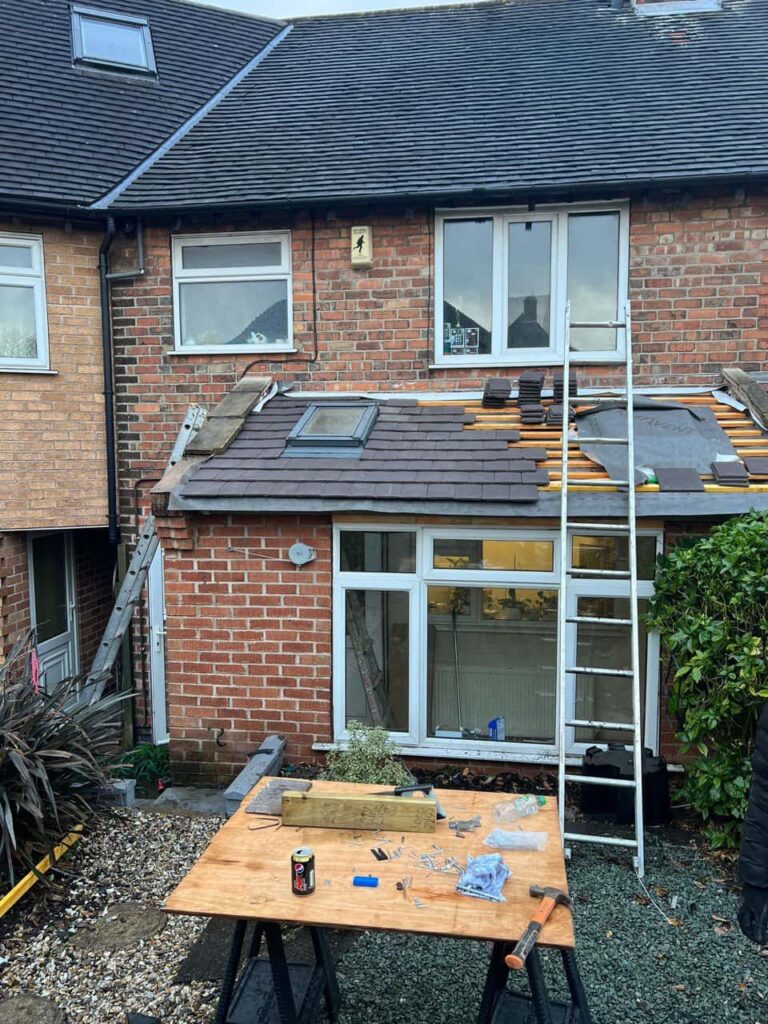
Strong winds and storms can put considerable pressure on a roof. Tiles can become displaced, flashing may loosen and damaged sections can allow rainwater to enter the property. Even when damage is not immediately obvious, a storm can expose weaknesses that may develop into more serious roofing problems.
For homeowners and property owners in Wingerworth, Nottinghamshire, knowing what to do after wind or storm damage can help protect the property and ensure roofing problems are dealt with appropriately.
What Types of Roof Damage Can Storms Cause?
Storm conditions can affect different parts of a roofing system. The extent of the damage depends on the condition of the roof, the materials used and the severity of the weather.
Common examples include:
- Slipped or missing roof tiles
- Cracked or broken tiles
- Loose or damaged flashing
- Damaged roof coverings
- Blocked or displaced guttering
- Damage around roof edges and junctions
- Water entering through exposed areas
Some damage is immediately visible, while other problems may only become apparent when rainwater begins entering the building.
What Should You Do After Storm Damage?
Safety should be the first priority. Do not climb onto a damaged roof to inspect it yourself, particularly when surfaces are wet or roofing materials have become loose.
From a safe position, look for obvious signs such as missing tiles, displaced materials or water entering the property. If rainwater is coming indoors, move furniture and belongings away from the affected area where it is safe to do so.
If water is close to electrical equipment or fittings, avoid contact with potentially affected items and take appropriate safety precautions.
Once immediate risks have been addressed, arrange a professional roof inspection.
Why Should Storm Damage Be Inspected Promptly?
A roof can appear relatively intact from ground level while still having damage that requires attention. A displaced tile, loose flashing or damaged joint can create an entry point for rainwater.
If these defects are left untreated, continued exposure to wind and rain can worsen the problem. Water may also travel beneath the roof covering before becoming visible inside the property.
Prompt inspection helps establish the extent of the damage and identifies which areas require repair.
How Are Slipped and Broken Tiles Repaired?
Individual tiles that have slipped or broken can often be replaced, provided the surrounding roof remains in suitable condition.
A roofer should also check why the tile moved in the first place. If fixings have deteriorated or nearby materials have become unstable, simply replacing one tile may not address the underlying issue.
Where several tiles have been affected, a wider inspection can help determine whether the roof has experienced more extensive movement.
What About Damaged Flashing?
Flashing is commonly found around chimneys, roof junctions, walls and other areas where water could potentially enter. Strong winds can loosen or damage flashing, creating gaps that allow rainwater beneath the roof covering.
Depending on its condition, flashing may need to be secured, repaired or replaced. The surrounding area should also be checked for signs of water ingress.
How Can You Tell If Storm Damage Has Caused a Roof Leak?
Signs of a roof leak may include:
- Damp patches on ceilings or walls
- Water staining
- Dripping during rainfall
- Damp insulation in the loft
- Musty smells
- Visible moisture around roof timbers
The location of an internal water stain does not necessarily indicate the exact point of entry. Water can travel along roof components before appearing inside the property, which is why professional investigation is important.
Can Storm Damage Be Prevented?
Regular roof maintenance cannot prevent every type of storm damage, but it can help reduce the risk of existing weaknesses becoming serious problems.
Routine checks can identify deteriorating tiles, loose flashing, damaged roof edges and blocked drainage. Addressing these defects before severe weather arrives can help maintain the overall condition of the roof.
After particularly strong weather, a professional inspection can also identify damage that may not be obvious from ground level.
Professional Storm Damage Roof Repairs in Wingerworth
If your roof has been damaged by strong winds or storms in Wingerworth, Nottinghamshire, Wingerworth Roofing Repairs can inspect the affected areas and identify suitable repairs.
Our approach is to assess both the visible damage and surrounding roofing components to establish the likely cause and extent of the problem. This helps ensure that repairs address the underlying defect rather than simply treating the most obvious symptom.
If you have noticed missing tiles, damaged flashing, leaks or other storm-related roof damage, contact Wingerworth Roofing Repairs to arrange a professional assessment.
Conclusion
Wind and storms can cause a range of roofing problems, from slipped tiles and damaged flashing to leaks and exposed roof sections. Acting promptly can help prevent further water ingress and deterioration.
Avoid accessing a damaged roof yourself and arrange a professional inspection where damage is suspected. For property owners in Wingerworth, Nottinghamshire, Wingerworth Roofing Repairs can assess storm-related roofing problems and carry out appropriate repairs to help restore the roof’s protection.
Call us on: 01246 956 395
Click here to find out more about Wingerworth Roofing Repairs
Click here to complete our contact form and see how we can help with your roofing needs.